There are few garments in contemporary fashion that possess the transformative versatility of an oversized structured blazer. Draped over shoulder seams on Parisian boulevards, paired with lived-in vintage denim on Soho sidewalks, or layered over a bias-cut silk slip dress for evening galas, the oversized jacket projects an aura of effortless, nonchalant sophistication.
Yet, for countless women—especially those who are petite (under 5'4"), short-torsoed, or softly curved—putting on a boyfriend jacket often feels less like European editorial chic and more like being swallowed alive by an ill-fitting choir robe. The sleeves bunch past the knuckles, the hem truncates the thighs, and the torso disappears into an unyielding rectangular block.
The secret to mastering this trend is not about changing your body; it is about mastering architectural proportion. When you understand the geometric interplay between volume, skin exposure, and vertical sightlines, an oversized blazer becomes the most flattering, elongating piece in your wardrobe. Here is your definitive styling masterclass.
📐 The Golden Rule of Volume Contrast
"If you wear volume on top, you must create anchor points through verticality, skin revelation, or structural definition below." Never pair boxy oversized outerwear with shapeless baggy bottoms unless you explicitly define your waistline or expose your slenderest pivot points (wrists, neck, or ankles).

Formula 1: The "Rule of Thirds" (1/3 Top to 2/3 Bottom)
Human eyes are naturally drawn to the classical Greek golden ratio. When an outfit cuts you exactly in half (1:1 ratio—a boxy jacket ending mid-hip paired with mid-rise trousers), you visually shorten your frame.
To create the flattering 1:3 to 2:3 proportion:
- Tuck in your base layer: Wear a high-waisted bottom (jeans or tailored trousers) and firmly tuck in a fitted baby tee, ribbed tank, or bodysuit. This marks where your legs begin, tricking the eye into perceiving 8 inches of extra height.
- Leave the blazer unbuttoned: An unbuttoned oversized blazer creates two long, vertical parallel lines running down the center of your torso, creating an immediate slimming, column effect.
- Pair with streamlined denim: Follow the silhouette balance detailed in our guide on Princess Kate's slim-fit denim revival to ground oversized outerwear without adding unnecessary bulk.
Formula 2: The Three Pivot Points Rule (Wrists, Collarbone & Ankles)
Why do celebrities like Hailey Bieber and Rosie Huntington-Whiteley look sharp even in massive XXXL blazers? Because they expose their pivot points.
The human brain calculates a person’s overall silhouette by registering where the body is narrowest: the wrists, the collarbone/neck, and the ankles. If all three are covered in heavy wool and long cuffs, you disappear.
💡 The 10-Second Hair Tie Sleeve Hack:
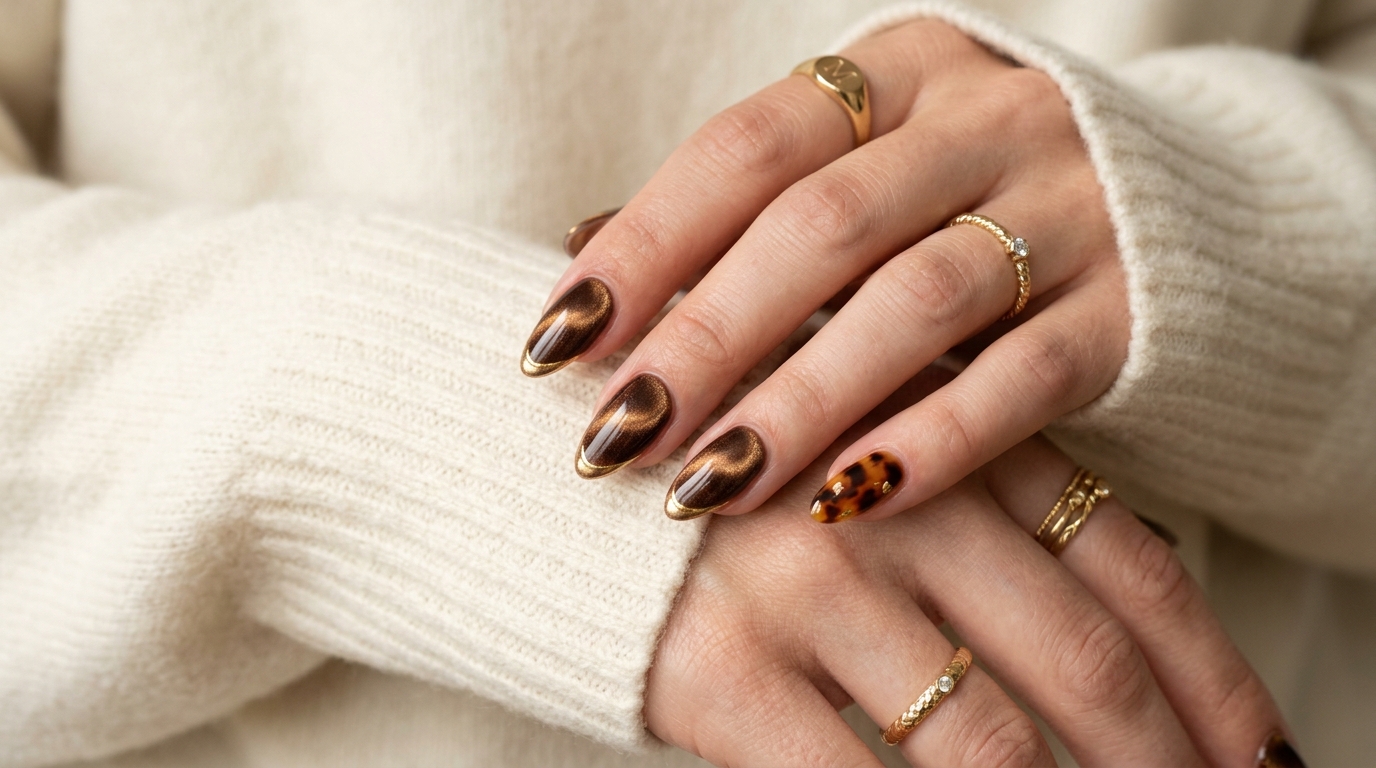
Take an elastic hair tie or discreet rubber band, slide it over your blazer sleeve up to your elbow, and fold the fabric back down over it. This locks your sleeves comfortably at your forearms all day without falling down, exposing your wrists and hands. Elevate the look by pairing your exposed wrists with chunky sculptural molten cuffs and this season's breakout chocolate velvet or chrome micro-French manicures.
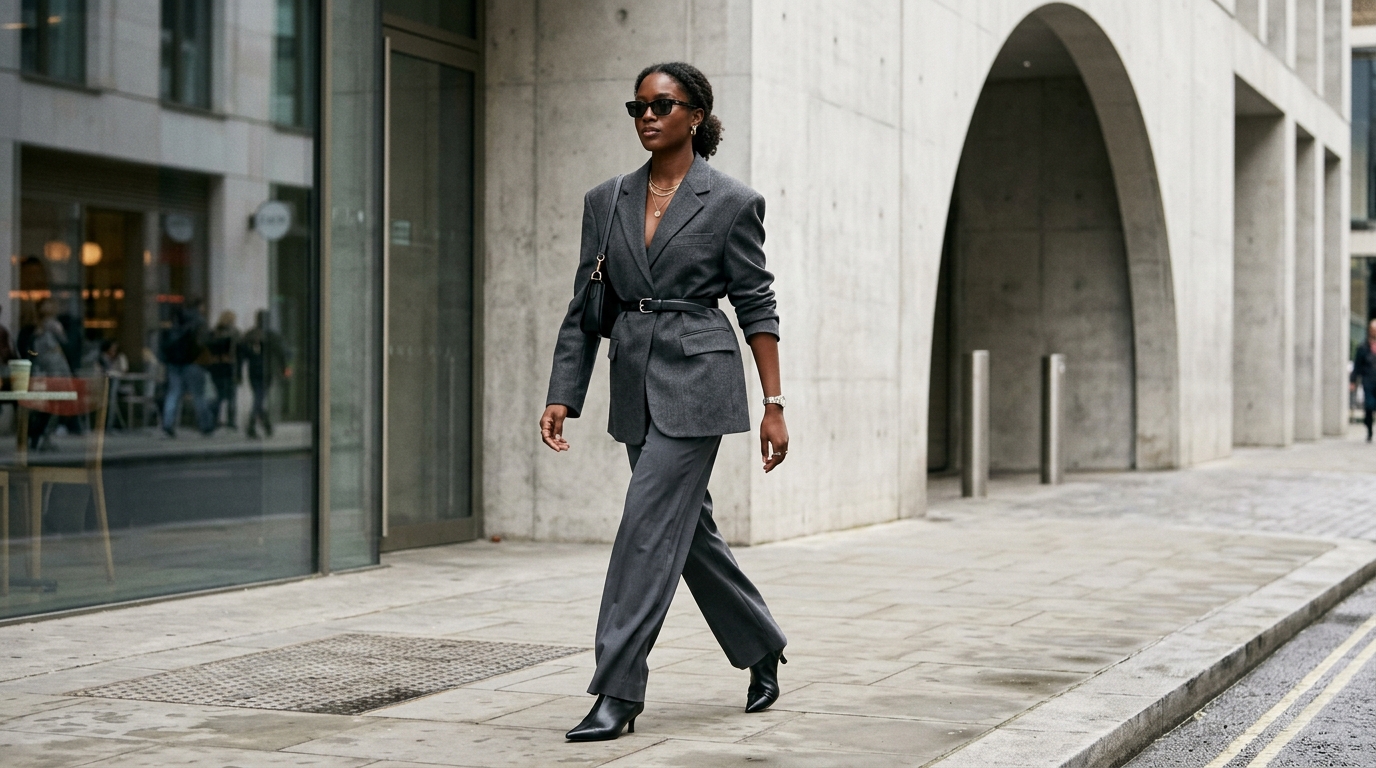
Formula 3: The Cinched Waist Architecture (Belting the Volume)
For mid-sized and hourglass body types, wearing an unbelted boxy blazer can sometimes mask natural curves. The solution? Add an intentional, contrasting belt over the blazer exterior.
How to execute:
- Fasten the top two buttons of your oversized blazer.
- Wrap a slim, 1-inch to 1.5-inch leather belt tightly around your true waist (the narrowest point between your ribs and hips).
- Slightly blouse the fabric above the belt by 1/2 inch to create an effortless, sculpted peplum flare over the hips.
- This technique draws direct inspiration from high-couture silhouettes popularized by Kim Kardashian's structured Balenciaga styling era, turning oversized casualness into power-dressing authority.
Formula 4: The Sandwich Dressing Method
If your outfit feels disjointed or top-heavy, use the viral Sandwich Dressing Technique to create psychological visual symmetry.
The rule is simple: Match your footwear color or visual weight to your outermost layer, and let your middle layers contrast.
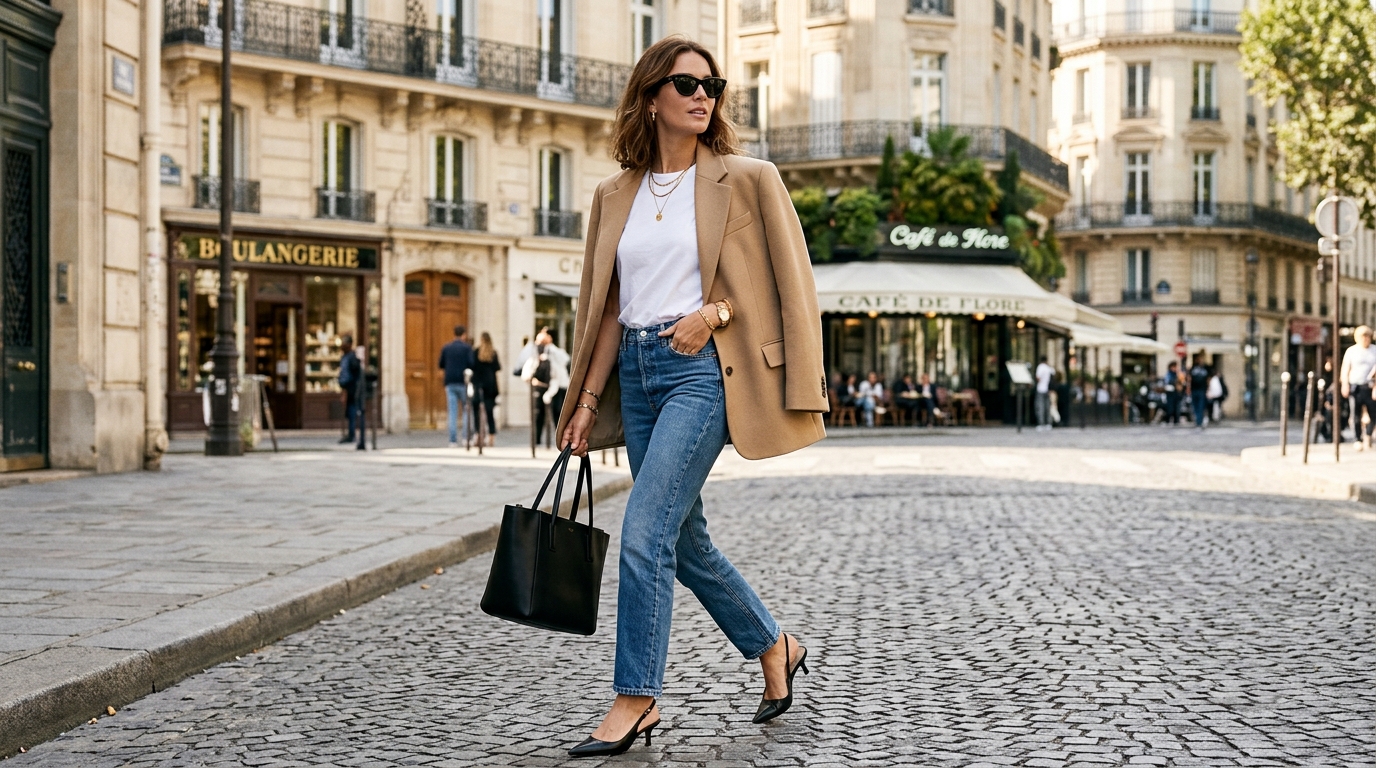
- Top Layer (Bread): Camel or Tan Oversized Blazer.
- Middle Layer (Filling): White tank top + Medium blue straight jeans.
- Bottom Layer (Bread): Camel suede loafers, pointed ankle boots, or classic Damson Madder x Clarks Wallabee mules.
Because the top and bottom bookend the outfit in the same color family, the viewer's eye travels smoothly up and down, creating an unbroken vertical line that makes you look taller.
Formula 5: Footwear Geometry (Pointed Toes vs Chunky Soles)
The shoes you select dictate whether an oversized blazer looks elevated or sloppy. Because an oversized jacket adds visual weight across the shoulders, your footwear must either:
- Elongate via Sharp Geometry: Pointed-toe kitten heels, pointed slingbacks, or sharp ankle boots physically extend the line of your leg by an extra 2 inches. This is the single most effective hack for petite women.
- Counter-Balance with Intentional Heft: If you prefer flats, opt for a lug-sole loafer or clean retro sneaker (like the Adidas Samba or New Balance 550). Never wear flimsy ballet flats with an unbelted heavy wool blazer, as the lack of sole weight will make the outfit look top-heavy.
How to Build Your Capsule Blazer Wardrobe
An oversized blazer isn't just a trend piece—it is the foundational cornerstone of our 10-Piece Minimalist Capsule Wardrobe Checklist. When investing in your first piece, prioritize:
- Structured Wool-Blend or Crepe: Avoid stiff, cardboard polyester that flattens out, or ultra-thin fabrics that wrinkle. You want a fabric with natural drape that falls cleanly over the hip line.
- Light Internal Shoulder Pads: Even in oversized fits, subtle shoulder pads maintain architectural structure and prevent the garment from drooping like a bathrobe.
- Neutral Tonal Palette: Start with rich espresso, charcoal melange, oat camel, or classic jet black before experimenting with plaids and patterns (learn how to coordinate checks and textures in our Pattern Mixing Masterclass).
Frequently Asked Questions (FAQ)
Q: Should I size up to get an oversized blazer, or buy my regular size?
A: Always buy an item designed intentionally as "Oversized" in your true regular size! When you simply size up in a regular cut blazer, the armholes drop too low, the neck collar gapes, and the shoulder pads sag off your frame. A blazer tailored specifically with an oversized cut maintains proper collar-to-neck proportions while purposefully adding room through the torso and sleeve drape.
Q: Can petite women under 5'2" really pull off an oversized blazer?
A: Absolutely. The key for petite women is hemline control. Aim for a hemline that hits mid-thigh or just below the buttocks—never mid-calf. Combine with Formula 1 (high-waisted bottoms) and Formula 2 (pushing sleeves up to expose wrists), and wear a pointed-toe shoe to maximize vertical lines.
Q: What is the best way to clean and steam an oversized blazer?
A: Wool-blend blazers should rarely be dry cleaned (once per season is enough). Invest in a handheld garment steamer to relax wrinkles and kill odors between wears, and always hang on broad wooden contour hangers to preserve the shoulder pad shape.